Effects
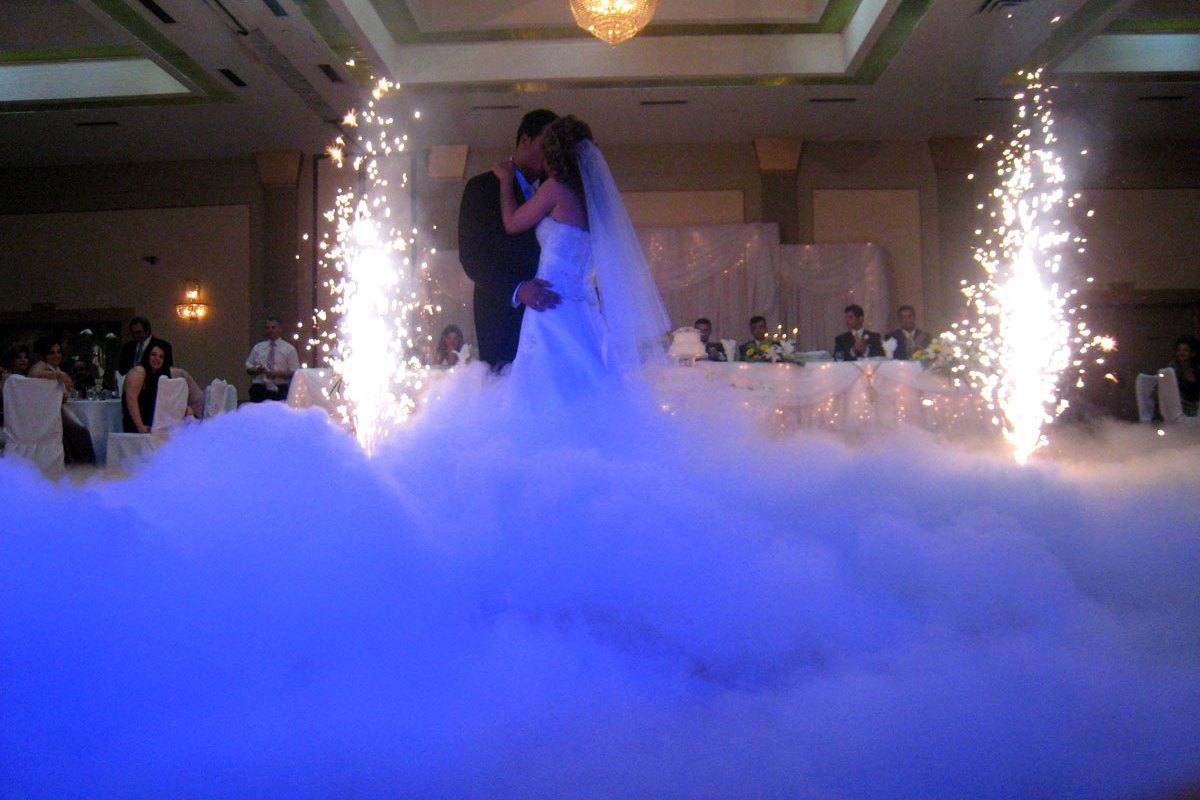
Dancing on the Clouds: dry ice first dance in Toronto
The cloud that sits on the floor and stays there. It is dry ice from a professional machine, not a fog machine, and the difference is the entire effect. Ankle height and it stays down. A glycol fogger fills the room and ruins the photographs.
$595, Machine, operator and ice included, Roughly 4 minutes of cloud
- Real dry ice, not a fog machine
- Cued live, never on a timer
- Venue permission checked in advance
- Toronto and the GTA
What Dancing on the Clouds includes
| Item | Detail | Price |
|---|---|---|
| Dancing on the Clouds | Our professional dry-ice machine, 10–15 kg of ice collected the same day, setup, an operator on the cue, one activation of about four minutes | $595 |
| Second activation | The grand entrance, the cake, or a band intro on the same night | $225 |
| Standalone booking | When we are not already running your DJ, sound or lighting that night: a dedicated trip and operator | add $200 |
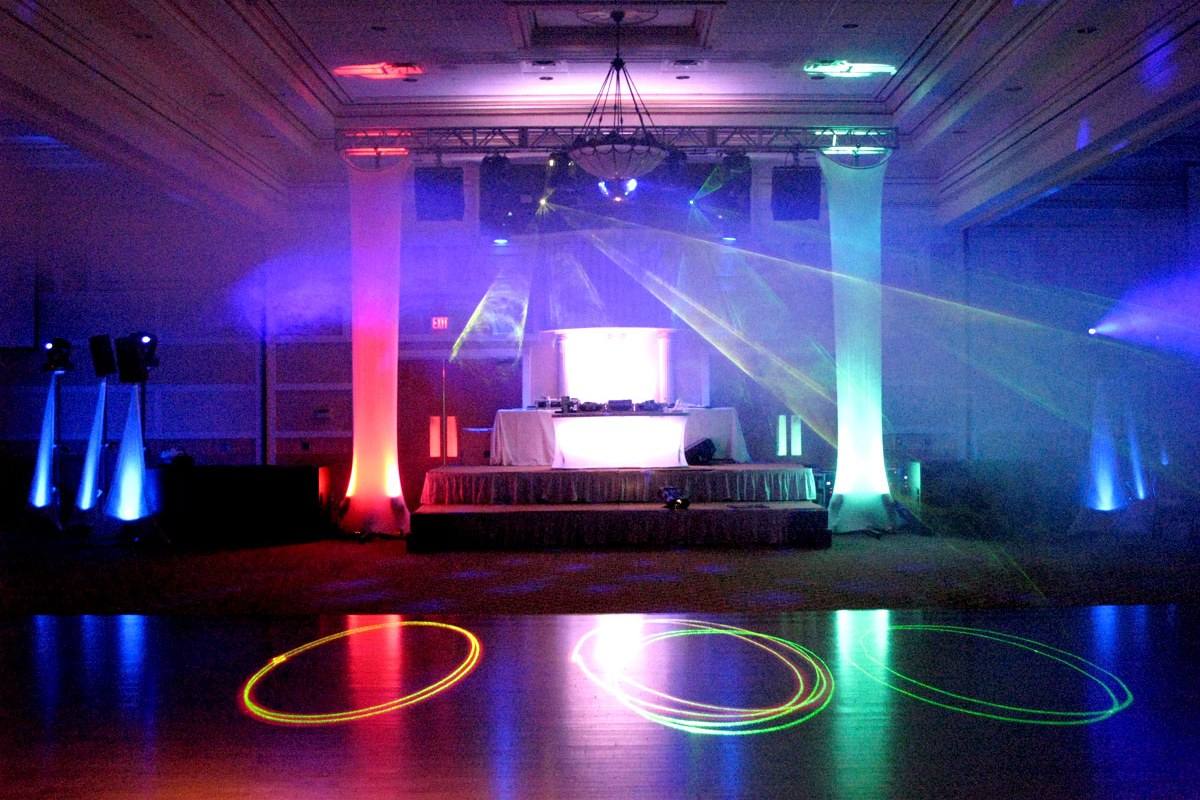
It is included in the Signature Experience, and it sits alongside cold sparks and lasers on the special effects page.
Why dry ice and not a fog machine
A standard fog machine makes warm glycol fog, which rises. Within ninety seconds it is at head height, the room is hazy, the photographs are soft and the fire panel is thinking about it.
Dry ice fog is chilled. It is heavier than the air around it, so it lies on the floor at ankle height and slowly dissipates. That is the effect people have actually seen and want.
What happens on the night
- Setup
- Machine sited at the edge of the floor, hose run under the skirt
- Water
- Heated reservoir, brought to temperature about 20 minutes before
- Ice
- 10–15 kg of dry ice, collected the same day: it does not keep
- Duration
- About 4 minutes of dense cloud, enough for one full song
- Operator
- Present. The cue is live, not on a timer
- Ventilation
- CO₂ is heavier than air. We check floor-level ventilation with the venue first
What it needs from the venue
- A 15A circuit near the dance floor.
- Permission. Most venues allow dry ice and ban glycol fog. Ask specifically; the answers differ.
- A floor that is not deep carpet. Cloud does not travel across shag.
- No strong HVAC blowing across the floor at that moment, which the venue can usually pause.
Photographs
Tell your photographer it is happening. A low cloud lit from the side or behind photographs beautifully; lit from the front with an on-camera flash it photographs like a white blanket. Thirty seconds of conversation between us and them fixes it.
Check your date
The first question is always whether the date is open. Start there: the rest takes two minutes.
Common questions
How much is a dry ice first dance in Toronto?
$595, including the machine, the ice, the operator and the setup. There is no separate delivery charge when we are already running your event; booked on its own it is $200 more.
How long does the cloud last?
About four minutes of dense cloud: enough for one full song. It can be extended with more ice if you want two.
Is dry ice safe indoors?
Yes, in a normal event space with normal ventilation. Dry ice fog is carbon dioxide and it sits low, so we check floor-level ventilation with the venue and never use it in a small unventilated room.
Will it set off the fire alarm?
Dry ice fog does not normally trigger optical smoke detectors the way glycol fog does, because it is water vapour and CO₂ rather than an aerosol. We still confirm with the venue first.
Can we use it for something other than the first dance?
Yes. Cake, a grand entrance, or a band intro. One charge of ice is one moment; a second costs $225.
What is Dancing on the Clouds?
It is the name most couples know the dry-ice first dance by: a dense, low cloud across the dance floor while you dance, so the photographs look like you are dancing on a cloud. It is the same effect this page describes.