Nightlife
Club event production in Toronto
For promoters and venues running a night that the house system was never built for. We supplement the house rig instead of fighting it, and we bring a technician who stays for the whole night.
Production from $1,200, Promoter and venue rates, Insured and invoiced
- A technician until strike, not a drop-off
- $2M liability, COI to the venue
- We do not touch the house rack uninvited
- Toronto, North York, Vaughan, Mississauga
What promoters actually need
Usually not a whole PA. A promoter who has been quoted for a full system has normally been quoted for the wrong thing. What a room that already has boxes on the wall is missing is almost always the same four items.
- Sub reinforcement to whatever the house top boxes already cover. A house rig is voiced for a bar at 40 per cent, not for a floor at midnight.
- Booth monitoring. The single most common complaint from a guest DJ in this city, and the cheapest thing on this list to fix.
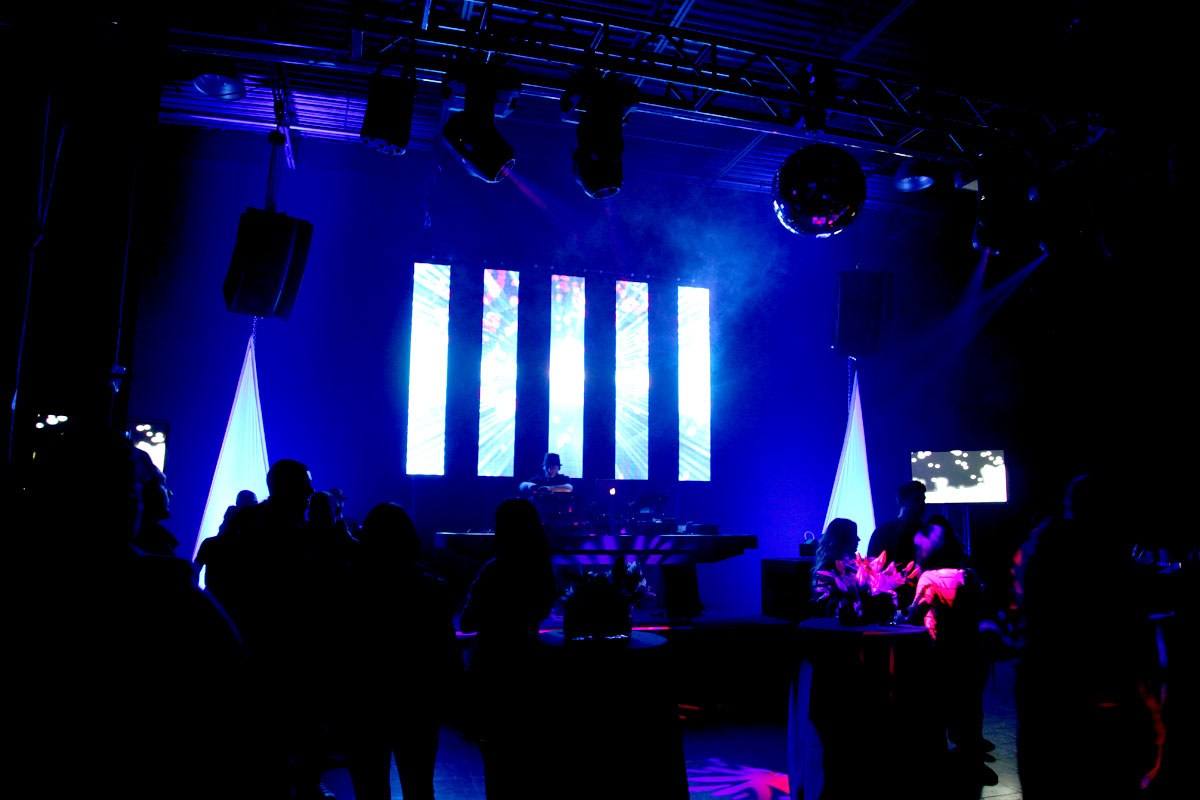
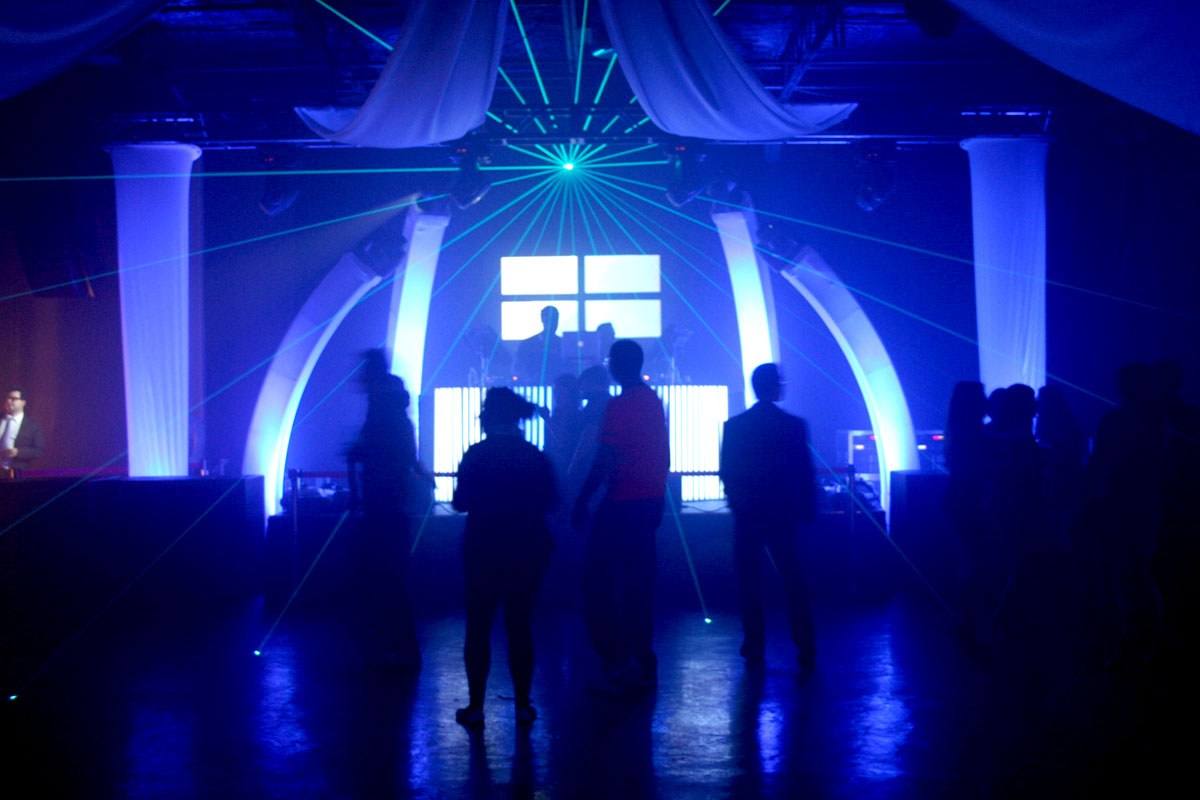
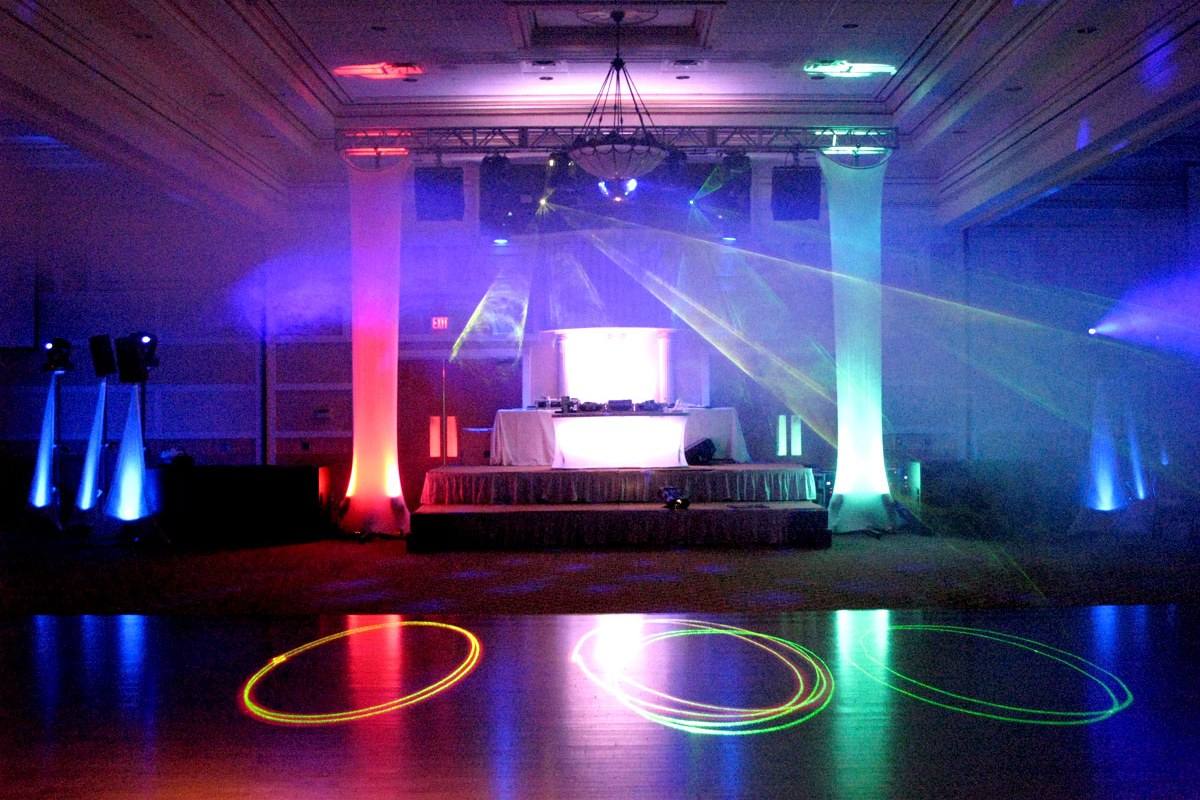
- Moving heads, blinders and haze, run live rather than on a loop, so the room reads on a phone camera. Every photograph out of your night is marketing for the next one.
- A technician on site all night, not a delivery and a phone number. Something always goes wrong at 1am and it is only a disaster if nobody is standing next to it.
- A VJ, where the room has a screen or a wall worth throwing at. Visuals mixed live to the set rather than a loop running behind it. See what that actually involves. On a club night the screen is half the production and it is the half that ends up in everybody's camera roll.
And behind all of it, $2M liability and an invoice your venue's accounts department can actually process. That is what gets a promoter booked again, and it is unglamorous enough that half the market skips it.
Working with a house system, not against it
The house rig belongs to the venue and so does the rack it lives in. We do not open it, re-tune it or re-patch it without the person who holds the key standing there, because a night that sounds better and leaves the room broken for tomorrow has cost the venue more than it made.
What we do is take a feed, add what is missing underneath it, and put a system processor in front of our own boxes so the two are time-aligned rather than merely both loud. Two systems that are not aligned do not add up. They cancel, in the exact frequency range you paid to add.
What we ask a venue before the night
- The rig
- What is installed, what it is voiced for, and whether we may take a feed from it
- The rack
- Who holds the key, and who is on site who can open it
- Power
- Available circuits at the booth and at the stack, and whether either is shared with the bar
- Load-in
- The door, the route, the time, and whether it crosses a public area while the venue is trading
- Curfew
- The real one. Not the licence, the one the neighbours enforce
- Capacity
- And whether the fire load changes anything about where a stack can stand
A night is a product, not an evening
The nights that survive have a name, a shape and an audience, and the door on week six is bigger than the door on week one. The nights that do not are a good DJ in a room, once.
We are more interested in the first kind. That means talking about who the room is for before talking about what is in it, and it means production that stays consistent week to week so the audience gets the same night they came back for. On this side of the business the closest parallel is the residency work in Alanya: same argument, different sea.
Public, ticketed nights
If a night is genuinely public and ticketed we can list it here with the ticket link, and it is marked up as a real event. Private bookings are not listed and are not marked up as events. They are neither public nor attendable, and pretending otherwise is the kind of thing that gets a site penalised.
No public dates are currently listed. Private bookings remain private; new ticketed events will appear here when announced.
Check your date
The first question is always whether the date is open. Start there: the rest takes two minutes.
Common questions
Do you work with the venue's existing system?
Usually yes, and it is cheaper. Most club systems cover the top end adequately and run out of low end and booth monitoring. We fill the gap instead of replacing the rig, and we time-align what we add so the two systems reinforce each other instead of cancelling.
Do you provide a technician for the night?
Yes. A drop-off is not production. Someone stays with the system from doors to strike.
Can you supply DJs as well as production?
Yes. See the Persian celebrations page for that side of it. Many promoters book both together, and it is one conversation instead of three.
What does club production cost?
From $1,200 for sub reinforcement, booth monitoring and basic lighting with an operator. Full production for a large room runs $4,000 to $12,000. We quote line by line so you can see what is driving it.
Will you re-tune the house system?
Only with the person who holds the key standing next to us. A night that sounds better and leaves the venue broken for tomorrow is not a favour to anybody.
Can you put visuals on the screen for the night?
Yes. A VJ mixes clips, loops and a floor camera live to the set, from the same desk as the lighting, and your night's own artwork goes into the rotation instead of sitting on a still. If the room has no screen we can bring one. The projection and VJ page covers both.
Can you send a certificate of insurance to the venue?
Yes. $2M commercial general liability, with the venue named as additional insured, sent directly to their contact the same day you ask.
Keep reading
- DJ for Persian celebrations
- Sound system rental
- Event lighting
- Screens, projection and VJ: visuals mixed live to the set
- Beach clubs and club nights in Alanya: residency programming on the Turkish Riviera